


Overview
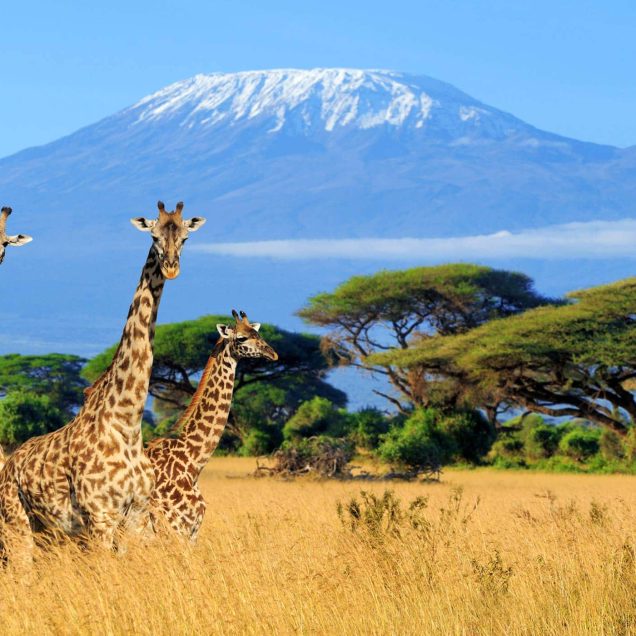
Mount Kilimanjaro is a dormant volcano in Tanzania and the highest mountain in Africa, standing at 5,895 m (19,341 ft). As the world’s tallest free-standing mountain—meaning it rises alone rather than as part of a range—it is one of the famed Seven Summits and a bucket-list destination for trekkers worldwide.
Core Facts
- Location: Northern Tanzania, near the border with Kenya and approximately 225 km south of Nairobi.
- The Three Cones: The massif is made up of three volcanic cones: Shira, Mawenzi, and Kibo. While Shira and Mawenzi are extinct, Kibo is dormant and the highest point.
- Uhuru Point: The absolute summit, located on the rim of the Kibo crater.
- The Name: The name is widely believed to combine the Swahili word kilima (mountain) and the Chagga word njaro (whiteness)
Sights


Info
Mount Kilimanjaro is one of Africa’s most iconic natural landmarks and the highest mountain on the continent, rising to 5,895 metres above sea level. Located in northeastern Tanzania near the Kenya-Tanzania border, Kilimanjaro attracts thousands of visitors each year who come to experience its breathtaking scenery, unique ecosystems, and the challenge of reaching its snow-capped summit. Designated as a UNESCO World Heritage Site, the mountain offers an unforgettable adventure for climbers, nature lovers, photographers, and cultural tourists alike.
The most famous attraction on Mount Kilimanjaro is Uhuru Peak, the highest point on the mountain and in Africa. Reaching the summit is a dream for many travelers and provides spectacular panoramic views stretching across Tanzania and Kenya. Climbers can choose from several routes, including the Marangu, Machame, Lemosho, Rongai, and Northern Circuit routes, each offering different landscapes, difficulty levels, and trekking experiences.
One of Kilimanjaro’s most remarkable features is its diverse ecological zones. As visitors ascend the mountain, they pass through lush rainforest, heath and moorland, alpine desert, and finally the arctic summit zone. The rainforest is home to blue monkeys, colobus monkeys, and numerous bird species, while the higher elevations offer unique alpine vegetation and dramatic volcanic landscapes.
Kilimanjaro is also famous for its glaciers and permanent ice fields near the summit. Although these glaciers have been gradually shrinking due to climate change, they remain one of the mountain’s most striking attractions. Sunrise at the summit, with golden rays illuminating the glaciers and surrounding plains, is considered one of the most spectacular sights in Africa.
Beyond the mountain itself, Kilimanjaro National Park offers excellent opportunities for wildlife viewing, birdwatching, and nature photography. The lower slopes support a rich variety of flora and fauna, including elephants, buffaloes, antelopes, and numerous bird species. Guided nature walks around the park provide visitors with a closer appreciation of the region’s biodiversity.
Cultural tourism is another important attraction in the Kilimanjaro region. Visitors can explore traditional Chagga villages on the mountain’s slopes, learn about local customs and history, and visit coffee farms where some of Tanzania’s finest coffee is grown. Cultural tours often include traditional music, dance performances, local cuisine, and visits to historical sites and caves that were once used as shelters during tribal conflicts.
Several beautiful waterfalls are found around the mountain, including Materuni Falls and Kinukamori Falls. These scenic sites offer excellent hiking opportunities and provide visitors with a refreshing break while exploring the foothills of Kilimanjaro. Materuni village, in particular, is known for its stunning waterfall, coffee tours, and spectacular views of the mountain.
The area surrounding Mount Kilimanjaro also serves as a gateway to other renowned attractions in northern Tanzania, including Serengeti National Park, Ngorongoro Conservation Area, Tarangire National Park, and Lake Manyara National Park. Many visitors combine a Kilimanjaro trek with a wildlife safari, creating a comprehensive East African adventure.
Whether seeking the challenge of summiting Africa’s highest mountain, exploring unique ecosystems, discovering local cultures, or simply enjoying breathtaking scenery, Mount Kilimanjaro offers a truly exceptional travel experience and remains one of the world’s most celebrated adventure tourism destinations.